Collections
Browse by Collections
Browse by Collections

A fine French porcelain piece asks to be held before it is displayed. Notice the luminous surface, the precision of a painted petal, or the satisfying close of a tiny hinged box. A thoughtful French porcelain collecting guide begins there: with an appreciation for the human skill that gives porcelain its lasting presence. From antique dinnerware to hand-painted Limoges boxes, these are objects made to carry beauty, memory, and, often, a family story.
French porcelain is a wide and richly varied field. A collector can spend a lifetime studying the decorative wares of Sèvres, the elegant table porcelains of Limoges, regional faience, Paris porcelain, and contemporary artisan work. There is no need to collect all of it. In fact, a collection becomes more compelling when it reflects a clear personal eye.
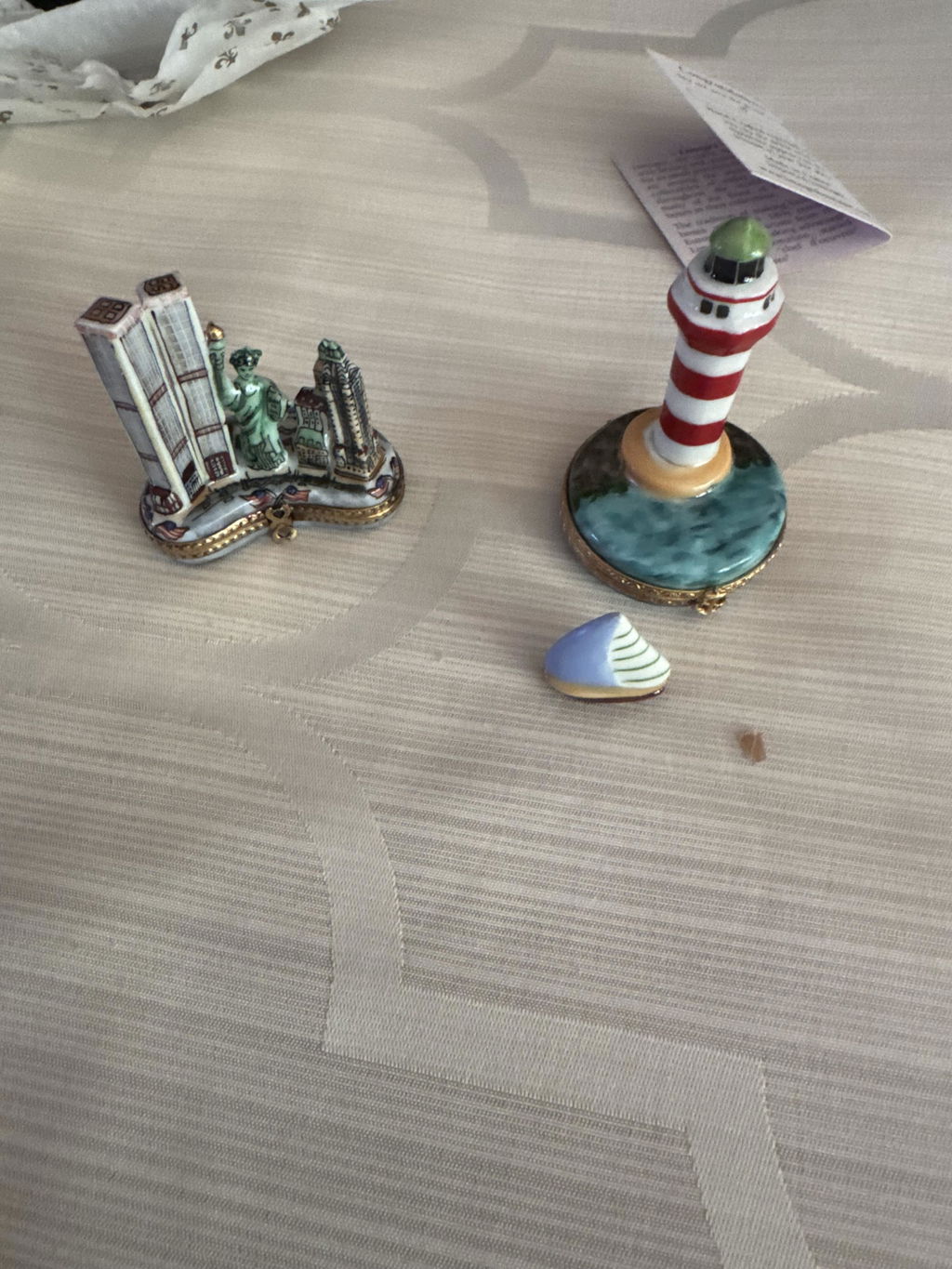
Some collectors are drawn to formal nineteenth-century plates, urns, and tea services. Others prefer the intimate scale of Limoges porcelain boxes, with their painted scenes, sculptural forms, and secret interiors. A tiny box shaped like a French poodle, wedding cake, perfume bottle, or Christmas package can mark an occasion just as beautifully as it decorates a cabinet.
Choose a starting point that you will enjoy seeing often. A motif-based collection - birds, roses, travel, fashion, religious treasures, or holiday designs - feels cohesive without becoming repetitive. Collecting by occasion is equally meaningful. A box chosen for a new baby, anniversary, graduation, or wedding can become a porcelain record of life’s milestones.
For many American collectors, Limoges is the most familiar name in French porcelain. The Limoges region of central France became internationally celebrated for its exceptional hard-paste porcelain, supported by local deposits of kaolin and generations of skilled makers. Yet “Limoges” is not the name of one single manufacturer. It is a regional designation associated with a long history of porcelain production.
That distinction matters when reading marks and evaluating a piece. A mark may identify a factory, decorating atelier, artist, importer, or retailer. It may also indicate the porcelain blank separately from the decorator who painted it. The most desirable piece is not automatically the oldest or the most elaborately marked one. Authenticity, quality of decoration, condition, rarity, and your own collecting purpose all matter.
For contemporary hinged Limoges boxes, look for signs that the porcelain was made and hand-painted in Limoges, France. Many genuine boxes bear a Limoges France mark and may include an artist’s initials or a factory mark. The metal clasp should be neatly fitted and functional, while the painted surface should show care rather than a flat, mechanical appearance.
Be cautious with broad descriptions such as “Limoges style” or “French inspired.” Those phrases can describe an attractive object, but they do not establish French manufacture. If provenance and authentic French craftsmanship are central to your collection, ask direct questions about origin, marks, and decoration before purchasing.
Porcelain marks are valuable clues, not a shortcut to certainty. They are often found on the underside of a piece, sometimes under glaze, over glaze, impressed into the porcelain, or added in paint. A mark can help establish a date range, identify a maker, or distinguish a factory blank from later decoration. It can also be faint, partially worn, or confusingly similar to another mark.
Begin by photographing the mark clearly, including the entire base and any numbers, initials, or symbols nearby. Compare its style with the piece itself. Does the decoration, form, and apparent age make sense together? A bright, contemporary painted box should not be expected to look like an eighteenth-century Sèvres object, and an antique plate may carry marks that reflect both manufacture and later retail sale.
Collectors should also remember that marks can be copied, added, or misread. The most reliable assessment considers the whole object: paste quality, glaze, painting, hardware where applicable, wear patterns, form, and documented history. For a high-value or inherited piece, a specialist appraisal can offer welcome clarity.
Porcelain is durable enough to survive for generations, but it is never indestructible. Before adding a piece to your collection, examine it in good natural light. Turn it slowly in your hands and inspect the rim, base, handles, finials, and any raised decoration. On a hinged box, open and close the clasp gently rather than forcing it.
The condition concerns collectors encounter most often include chips, hairline cracks, restoration, glaze wear, discoloration, and wear to gilt details. A hairline crack may be difficult to spot until light catches it. Restoration can be expertly done, but it should be disclosed and reflected in the price. A small, stable flaw may be perfectly acceptable in a rare antique piece you truly love; it is less desirable in a readily available contemporary collectible intended as an investment-quality gift.
Condition should be judged in context. A century-old hand-painted serving piece with slight gilding wear may retain tremendous charm and value. A newly made Limoges box should generally have a clean glaze, crisp painting, sound clasp, and no visible damage. Ask for detailed images when buying remotely, especially of the underside, interior, and closure.
The particular joy of French porcelain lies in its detail. On a hand-painted piece, colors may have subtle variation, linework may be remarkably fine, and shaded areas reveal the painter’s touch. Raised enamel dots, delicate gilding, miniature florals, and tiny figural faces require time and practiced control.
This does not mean every hand-painted piece must look identical or perfectly uniform. Slight variations are often part of its character. What you want to see is intentionality: balanced composition, clean edges, carefully placed color, and decoration that suits the form. A painted butterfly should seem to rest naturally on the curve of a box; a bouquet should enhance the porcelain rather than overwhelm it.
For hinged Limoges boxes, the sculptural silhouette is another sign of artistry. A charming animal, dessert, shoe, landmark, or holiday figure should feel thoughtfully modeled from every angle. The surprise inside - perhaps a tiny painted object or a meaningful inscription - can make the piece especially memorable as a gift.
A collection built only around bargains can quickly become unfocused. Instead, decide what each purchase should bring to your cabinet, table, or gift tradition. It may complete a series, commemorate a person, introduce a new artist, or simply make you smile every time you pass it.
Price reflects many variables: maker, age, rarity, condition, artistic complexity, original packaging, and demand for a particular subject. Popular motifs can be easier to find, while retired designs, limited editions, unusual shapes, and exceptional hand painting may command more. Higher cost does not always equal greater personal value, but a suspiciously low price deserves closer examination.
Purchase from sellers who describe pieces accurately and welcome questions about condition and origin. Specialists with deep knowledge of French porcelain can be especially helpful when you are comparing marks, building a themed collection, seeking an appraisal, or selecting a significant gift. At Limoges Boutique, authentic French-made, hand-painted Limoges boxes are chosen with this collector’s perspective in mind, honoring both the artisan and the occasion behind each treasure.
Porcelain rewards gentle stewardship. Display favorite pieces where they can be admired but are protected from crowded shelves, direct sunlight, moisture, and abrupt temperature changes. Sunlight can gradually affect painted colors and delicate decorative finishes. If you display a hinged box open, support the lid so the hinge is not under unnecessary strain.
Dust with a soft, dry brush or microfiber cloth. Avoid abrasive cleaners, soaking, dishwasher cycles, and harsh chemical products. When moving a piece, hold the body rather than a handle, finial, lid, or clasp. For storage, wrap each item separately in acid-free tissue or soft, clean material and avoid stacking porcelain directly against porcelain.
The finest collections are not assembled overnight. Let each piece earn its place through craftsmanship, personal meaning, or the pleasure it brings to your home. A small hand-painted treasure chosen with care may one day become the object a loved one reaches for first, asking where it came from and who chose it for them.
{"one"=>"Select 2 or 3 items to compare", "other"=>"{{ count }} of 3 items selected"}