Collections
Browse by Collections
Browse by Collections


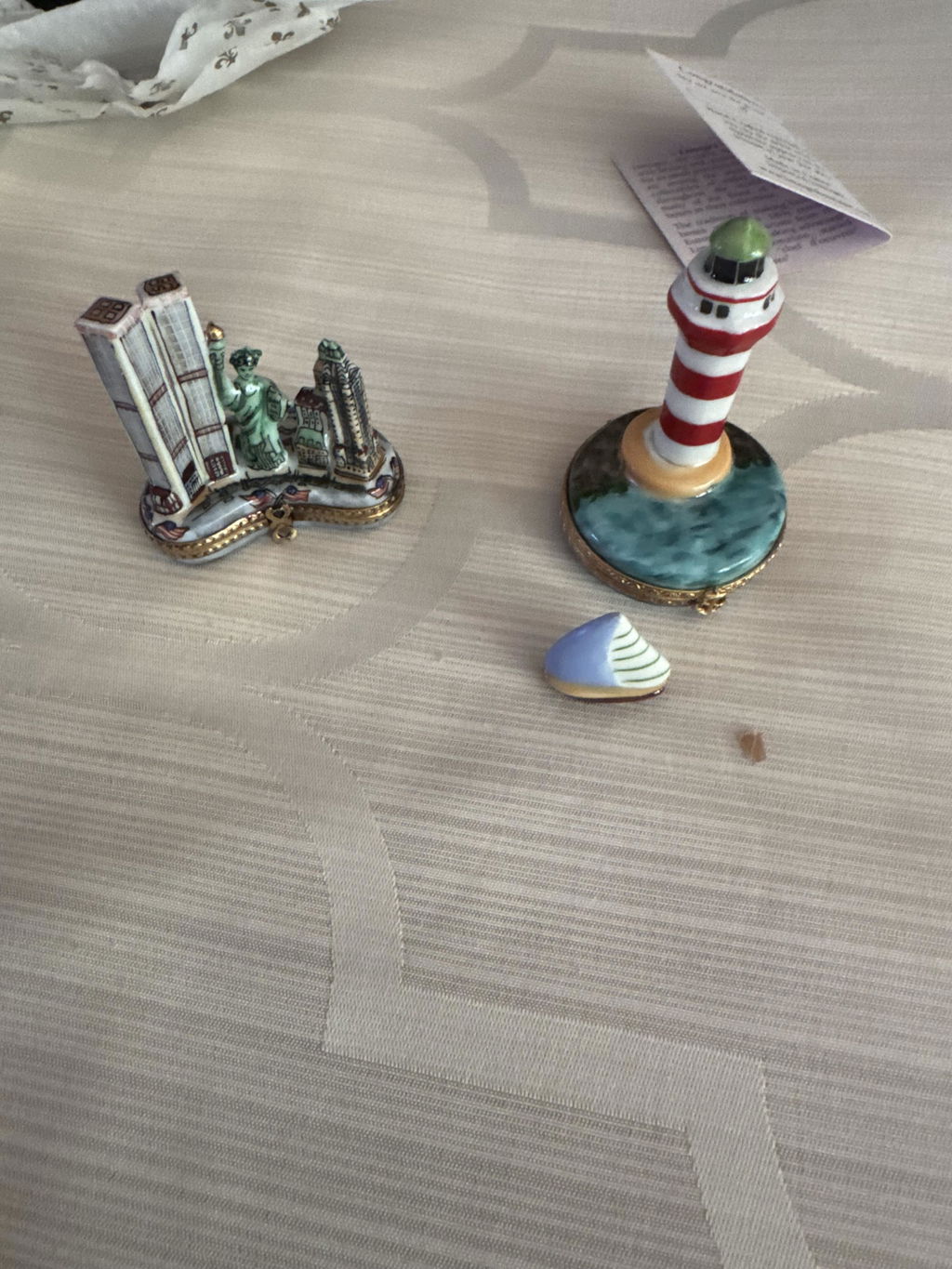
A tiny porcelain violin that opens to hold a private note. A hand-painted wedding cake that becomes part of an anniversary tradition. A bright ladybug tucked into a birthday card. Limoges boxes have a rare ability to make a small gesture feel wonderfully considered. Their scale may be delicate, but the artistry, history, and sentiment held within each hinged treasure are anything but slight.
For more than a century, these miniature porcelain objects have been cherished as refined gifts and collectible works of French decorative art. The best examples are made and painted by hand in Limoges, France, where porcelain craftsmanship has been a source of regional pride for generations. Every curve, brushstroke, clasp, and glint of gold is an invitation to look more closely.
A true Limoges box begins with hard-paste porcelain produced in the Limoges region of central France. The area became renowned for porcelain after kaolin, the essential white clay for fine porcelain, was discovered nearby in the 18th century. Its naturally luminous finish and remarkable strength gave French artisans an ideal material for detailed objects of beauty.
The hinged box developed into a beloved form because it paired usefulness with imagination. Early porcelain boxes were often used for snuff, cosmetics, pills, or treasured mementos. Today, they are admired for their sculptural character and their ability to commemorate a person, pastime, occasion, or place.
A hand-painted box is not simply decorated with a design. An artisan interprets the shape, building dimension with fine brushwork and carefully placed color. On a floral box, a petal may carry several shades of pink, ivory, or lavender. On a dog or cat, subtle strokes give expression to the face and texture to the coat. Many pieces are finished with hand-applied metal fittings, often chosen to complement the subject - a tiny crown, flower, heart, or another fittingly whimsical clasp.
That human touch matters. No two authentically hand-painted pieces will be perfectly identical, even when artisans work from a similar model. Slight variations are evidence of individual craftsmanship, not a flaw to be corrected.
For collectors and gift buyers alike, authenticity begins with origin. The term “Limoges” is sometimes used loosely in the marketplace, yet it should refer to porcelain made in Limoges, France. A genuine French-made piece will generally bear a mark on its underside identifying Limoges, France, the atelier, or the manufacturer. Marks vary by workshop and period, so there is no single stamp that tells the whole story.
The most reassuring approach is to consider several details together: the quality of the porcelain, the precision of the painting, the fit of the metal hinge, the finishing of the clasp, and the maker’s mark. Fine examples feel intentional from every angle. Their fittings sit neatly, their glazes have a polished depth, and their decoration follows the contours of the form rather than appearing flat or hurried.
A mark alone is not a guarantee, particularly when a piece is unfamiliar or offered without reliable provenance. Conversely, an older box may have a faint or partially worn mark. This is where knowledgeable appraisal guidance can be valuable. Age, rarity, condition, workshop, theme, and documented origin can all influence collectible interest and value.
At Limoges Boutique, 25 years of category-focused experience informs a careful commitment to authentic, French-made porcelain and to the artisans whose work keeps this tradition alive. For a first-time buyer, that specialist attention offers welcome confidence. For an established collector, it helps make room for the pleasure of finding a piece that genuinely belongs in the collection.
The most memorable Limoges gift usually begins with a detail about the recipient. Rather than selecting a generic luxury item, choose a subject that reflects a story, a devotion, or a moment worth remembering. A violin, paint palette, golf bag, or medical-themed box can honor a profession or passion. A favorite breed of dog may celebrate a beloved companion. A suitcase, Eiffel Tower, or travel trunk can recall an important journey.
Occasions offer their own rich language of symbols. Wedding cakes, rings, doves, and champagne bottles make graceful wedding or anniversary keepsakes. Baby shoes, cradles, and storybook animals welcome a new child with the sort of gift that may be displayed for decades. At Christmas, a Santa, ornament, or snow-covered cottage can become part of a family’s yearly ritual rather than a decoration used once and forgotten.
For romantic occasions, the subject can be tender without being predictable. A heart remains timeless, but a pair of teacups, a rose-filled basket, or a shared hobby often feels more intimate. The same principle works for milestone birthdays, retirements, graduations, and hostess gifts: the more specifically the piece speaks to the person, the more deeply it will be appreciated.
Collectors may choose differently. Some pursue an entire category, such as animals, flowers, food, religious motifs, or holiday designs. Others are drawn to particular ateliers, unusual forms, limited editions, or boxes with especially intricate painting. Neither approach is more correct. A focused collection has visual impact and can make research rewarding, while an eclectic cabinet of favorites tells a lively personal story.
When selecting a box, let yourself examine it as both an object and a miniature work of art. Consider whether the form feels imaginative and well balanced. Notice how the painter has treated the smallest details: the curl of a ribbon, the shading inside a flower, the expression on an animal’s face, or the highlights that bring a pastry or piece of fruit to life.
Condition is especially significant for collectors. Look for clean porcelain free of chips, cracks, repairs, or visible discoloration. The hinge should open and close properly without strain, and the metal mount should align securely. A box can be antique in spirit without being old, so it is wise not to assume that every French piece has the same age or rarity. Contemporary hand-painted Limoges boxes can be exceptional collectibles in their own right, particularly when their craftsmanship and provenance are clear.
Scale is another practical consideration. Some pieces are petite enough to rest in the palm of a hand, while others have a more substantial presence on a desk, vanity, bookshelf, or curio cabinet. A small box may be ideal for a surprise gift or a growing collection. A more detailed, figurative design may deserve a prominent place where its painting and sculptural silhouette can be enjoyed daily.
Limoges porcelain is durable for its delicacy, but it deserves gentle handling. Open the lid from the clasp rather than forcing the hinge, and lift the piece with clean, dry hands. A soft cloth is usually all that is needed for light dusting. Avoid harsh cleaners, soaking, and abrasive polishing, especially around painted surfaces and metal fittings.
Display pieces away from direct sunlight, strong humidity, and crowded shelves where they can be knocked together. If a box is stored rather than displayed, wrap it loosely in acid-free tissue or a soft cloth and place it in a sturdy container. Original packaging, when available, can be useful to retain for protection and collectible records.
If you are giving a Limoges box, the presentation can be as thoughtful as the piece itself. Tuck a handwritten message inside. Add a date or memory to the gift card. For a wedding, place a few words of advice within the box; for a graduation, include a wish for the road ahead. The hidden interior turns a beautiful object into a private keepsake.
The finest gifts do not demand attention loudly. They become part of a home, a tradition, or a memory, and their meaning deepens through the years. A Limoges box might begin as a birthday surprise, then become a cherished reminder of the person who chose it. It may sit on a dresser, appear each holiday season, or be passed to someone who recognizes the story it carries.
Choose the design that makes you pause and smile for a specific reason. In that small hand-painted scene, there is room for French artistry, personal history, and a sentiment that remains long after the occasion has passed.
{"one"=>"比較する2つまたは3つのアイテムを選択します", "other"=>"選択された3つのアイテムの{{ count }}"}