Collections
Browse by Collections
Browse by Collections


A tiny stamp beneath a porcelain box can carry a surprising amount of history. Learning how to identify Limoges marks helps collectors separate a genuine French porcelain treasure from an attractive piece that merely borrows the famous name. It also makes gift buying more meaningful: you can appreciate not only the hand-painted scene on top, but the skilled hands and French tradition behind it.
The process is not as simple as finding the word “Limoges.” That word may refer to a place, a style, a porcelain blank, a decorator, or, in some cases, a misleading marketing label. The most reliable identification comes from reading the mark in context - alongside the piece’s construction, painting, materials, and overall quality.
Turn the piece over and begin with good light, a magnifying glass, and patience. Marks may be printed, stamped, painted by hand, impressed into the porcelain, or partly hidden beneath an old price label or felt pad. On hinged Limoges boxes, they are usually found on the underside, though a decorator’s signature may also appear inside the box or along the base.
First, look for the complete marking rather than one familiar word. A mark that says “Limoges France” is more meaningful than one that says only “Limoges,” but neither should be treated as absolute proof on its own. Genuine pieces made in the Limoges region often carry a factory name, a decorator’s name or initials, a France designation, or a combination of these details.
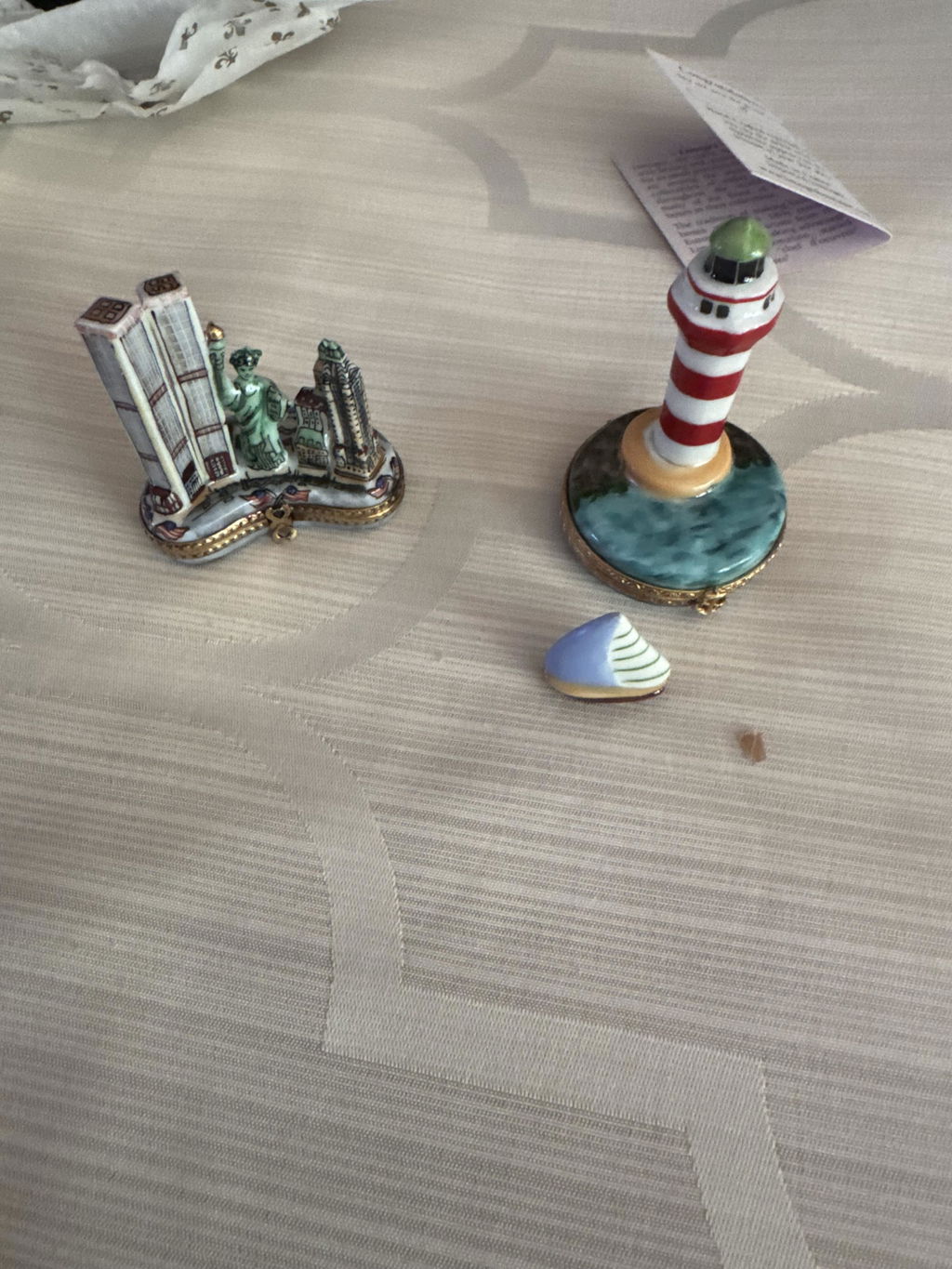
Next, study whether the mark suits the object. A fine hand-painted hinged box with carefully fitted gilt metal hardware, a smooth white porcelain body, and a crisp mark is far more persuasive than a rough, thick-walled box with generic metalwork and a vague printed label. Authenticity is built from a collection of consistent details.
“Limoges” does not identify one single manufacturer. It refers to the renowned porcelain-making area around Limoges, France, where kaolin deposits helped establish an important hard-paste porcelain industry. Over generations, many factories, ateliers, decorators, and retailers have used marks connected to Limoges.
For collectors, it helps to think of marks in three broad categories.
A factory mark identifies the company that made the porcelain blank or completed the porcelain piece. It may include a name, initials, symbol, or date-related variation. Some historic makers used distinctive devices such as stars, crowns, shields, or stylized lettering. Marks changed as businesses changed ownership, merged, or updated their branding, so even a well-known name needs to be matched to the likely production period.
Older factory marks often appear under the glaze or in a color such as green, blue, or red. But color alone does not establish age. A newer piece can have a green mark, and a historic-style mark can be reproduced.
A porcelain blank might be made by one workshop and decorated by another. This is especially relevant to hand-painted Limoges porcelain, where the decorating studio or artist can be central to the piece’s appeal. A decorator’s stamp may sit beside the factory mark, while a hand-painted signature or initials may appear discreetly near the design.
Do not assume that a signature is automatically a famous artist’s signature. Some are studio identifiers, some are painter initials, and some are decorative rather than easily traceable. Still, a carefully executed signature paired with exceptional painting can be a welcome indication of artisan involvement.
Certain marks identify the firm that imported, retailed, or commissioned a piece rather than the porcelain manufacturer. Export wording, including “France,” may help place a piece in a particular market, but it is not a guarantee of French manufacture by itself. The mark should be considered with the porcelain and workmanship, not isolated from them.
A mark is a valuable clue, not a verdict. The finest authentic Limoges boxes show a harmony between porcelain, painting, and metalwork that is difficult to imitate convincingly.
Begin with the porcelain body. Traditional Limoges porcelain is prized for its refined, hard-paste composition and luminous surface. It should feel elegant rather than heavy or chalky. The glaze is generally smooth and even, without pooling, gritty texture, or obvious mold seams.
Then inspect the hand painting. On a quality box, the design has dimension. You may see delicate shading in flower petals, individual feather strokes on a bird, expressive details in a figurine’s face, or tiny highlights that bring a scene to life. Hand-painted work is not identical from one box to the next. Slight variations are part of its character, not necessarily a flaw.
Finally, examine the clasp and hinges. Authentic French Limoges boxes are traditionally finished with metal mounts that are fitted to the porcelain shape. The clasp should close neatly and feel proportionate to the box. A charming miniature accessory inside - perhaps a tiny bird, bouquet, ring, or keepsake - can add collectible interest, but it should also be finely made and appropriate to the design.
The most common mistake is treating any piece marked “Limoges” as antique. Limoges porcelain continues to be made today, and modern French-made boxes can be highly collectible in their own right. Age, rarity, condition, artistry, and provenance all affect value. An older mark does not automatically make a piece more desirable, and a newer mark does not make it less authentic.
Another mistake is expecting every authentic piece to have a perfectly legible stamp. A mark may be light, partially glazed over, worn through use, or applied beneath a fitting. A missing mark warrants caution, especially when purchasing a costly item, but it does not always settle the question by itself.
It is also wise to be wary of phrases such as “Limoges style,” “Limoges type,” or “Limoges-inspired.” These may describe an aesthetic rather than an origin. If French manufacture matters to you, ask directly whether the porcelain box was made and hand-painted in Limoges, France.
Dating a Limoges mark can be rewarding, but it is rarely instant. Factory names may have been used for decades, and marks may overlap during transitions. Some historic marks have been revived or echoed by later producers. Condition can also distort the picture: a well-preserved older stamp may look newer than a faded modern one.
Instead of assigning an exact year from a single stamp, narrow the possibilities. Compare the wording, logo shape, placement, porcelain style, decoration, and hardware with documented examples. Consider whether the motif fits the proposed period. A very contemporary design paired with a supposedly nineteenth-century mark deserves closer scrutiny.
For an heirloom, estate find, or box believed to have substantial value, clear photographs are invaluable. Photograph the entire piece, the underside, the mark in close detail, the interior, and the hinges. A specialist can evaluate these elements together and explain what can be known with confidence and what remains uncertain.
Once you have identified a mark, preserve it. Avoid abrasive cleaners, dishwasher cycles, soaking the metal fittings, or scraping at a faded stamp. Dust gently with a soft, dry cloth and handle the box by its porcelain body rather than repeatedly lifting it by the clasp. Keep it away from direct sunlight, which can affect painted color over time.
If you are building a collection, keep a simple record for each piece: photos, measurements, purchase date, source, mark description, and any known history. This small habit makes future insurance, appraisal, gifting, or estate planning much easier.
A genuine Limoges box deserves to be enjoyed, whether it holds a tiny love note, celebrates a wedding or birthday, or simply brings a little French artistry to a dressing table. Let the mark guide your research, then let the craftsmanship tell the rest of the story.
{"one"=>"比較する2つまたは3つのアイテムを選択します", "other"=>"選択された3つのアイテムの{{ count }}"}