Collections
Browse by Collections
Browse by Collections

A tiny rosebud on the lid, a bird no larger than a thumbnail, a fine gold line following the curve of a clasp: these details can make a porcelain box feel wonderfully alive. Yet not every decorative surface is created the same way. Understanding hand painted versus transferware porcelain helps collectors and gift buyers recognize the work, heritage, and character behind the piece they are choosing.
Transferware has a legitimate and beautiful place in the history of ceramics. A finely made transfer can be crisp, decorative, and highly collectible in its own right. But when the desire is for an authentic French Limoges porcelain treasure shaped by an artisan's hand, the distinction matters. It affects how a piece looks up close, how individual it feels, and often how it is valued over time.
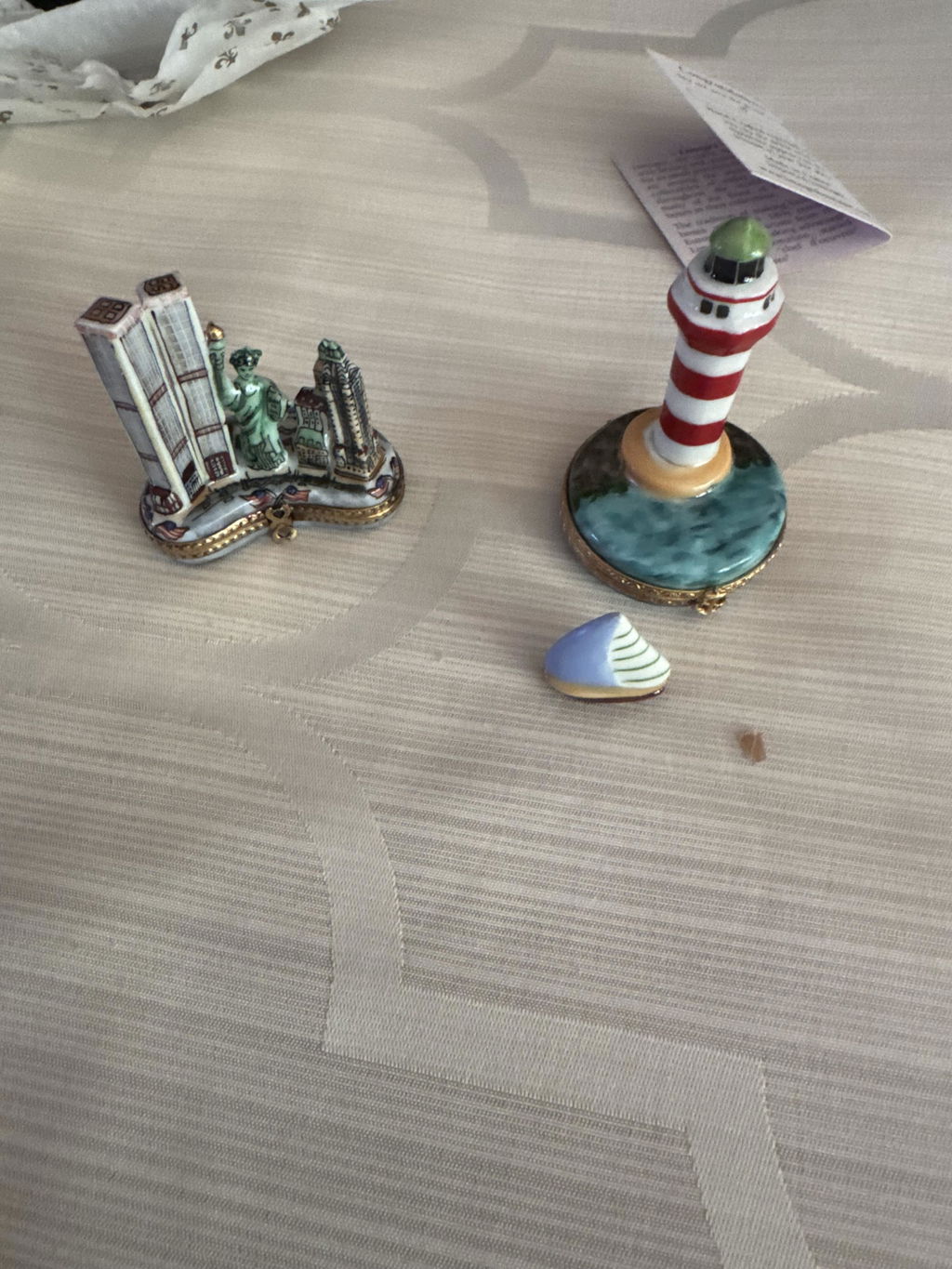
Hand-painted porcelain is decorated by an artist applying color directly to the fired porcelain surface with a brush. Depending on the design, the artist may build color in layers, add delicate linework, and fire the piece again to permanently set the decoration. On a hinged Limoges box, this work may include the miniature scene on the lid, a floral border around the base, a tiny surprise tucked inside, and carefully placed gold accents.
Transferware uses a printed image or pattern that is moved from a prepared transfer sheet onto the porcelain. The process allows the same design to be reproduced efficiently and with a high degree of consistency. Transfers may be applied as a complete image, or they may form part of a design that is later enhanced by hand.
That last point deserves attention. A piece can have hand-applied details without being entirely hand painted. An artisan may add gold trim, shading, or a few touches of color over a transfer. There is nothing inherently improper about this method when it is represented accurately. The concern arises when a mass-produced transfer-decorated item is presented as fully hand painted.
For discerning collectors, the question is not whether one method is universally "better." It is whether the technique matches the artistry, authenticity, and collectible experience promised by the piece.
A hand-painted design carries small evidence of human decision-making. One petal may be slightly more open than another. The wash of blue in a sky may deepen near the edge. A painter's brushwork can create an almost translucent softness in a flower or a lively expression on a tiny animal figure. These variations are not flaws. They are part of the charm.
Look closely at the painted area under good light. Hand-painted work often shows subtle shifts in color density, fine brushstrokes, and an organic quality at the edges of a motif. On a quality Limoges box, details are generally controlled and refined rather than rough. The artistry lies in precision as much as individuality.
Hand painting also gives artisans freedom to respond to the form itself. A painter can adjust a vine to follow a curved lid, place a butterfly so it appears to rest naturally near the clasp, or give a personalized inscription the balance it needs. This is especially meaningful for commemorative gifts. A wedding date, monogram, baby name, or milestone message becomes part of a keepsake rather than an afterthought.
Because each painter brings a slightly different hand, two boxes of the same general motif may never be exact twins. For many collectors, that gentle variation is one of the pleasures of acquiring authentic French-painted porcelain.
Transferware often appears especially uniform. Repeated flowers, scenic elements, or borders may have the same spacing and line quality from piece to piece. Under magnification, printed decoration can reveal tiny dot patterns, screen-like texture, or edges that look mechanically crisp rather than brush-shaped.
A transfer may also struggle to conform perfectly to complicated curves. On lower-quality pieces, collectors sometimes notice slight wrinkles, broken lines, misalignment, or areas where the image does not sit smoothly on the surface. High-quality transfers can be very well executed, however, so a single visual clue should not serve as a final verdict.
Color can offer another hint. Hand-painted porcelain commonly has nuanced shading and a sense of movement within each painted area. Transfer decoration may look flatter or more evenly filled. Still, an experienced decorator can hand-enhance a transfer convincingly, and some hand-painted work uses precise, graphic outlines. The most reliable approach is to consider the entire piece: its decoration, construction, marks, stated origin, and the reputation of the seller.
Fully hand-painted Limoges porcelain represents a chain of skilled work. The porcelain must be formed, fired, glazed, decorated, fired again, and fitted with its clasp. On many boxes, several French artisans contribute specialized skills before the finished piece reaches a collector. This labor helps explain why authentic hand-painted examples feel substantial as gifts and why they are often treasured across generations.
Rarity matters as well. A painter may create a limited number of a particular design, and a small workshop may retire a motif after a short production period. Even familiar subjects - a bouquet, a champagne bottle, a holiday tree, a beloved dog - gain personality through miniature artistry and fine French craftsmanship.
Transferware is often produced in larger quantities, which can make it more accessible and useful for coordinated tableware or decorative collections. Certain antique transferware patterns have strong historical interest and can command meaningful prices. But transfer decoration alone does not carry the same implication of individual brushwork that collectors expect from a fully hand-painted Limoges box.
Value is never determined by technique alone. Condition, age, provenance, maker, scarcity, subject matter, and demand all play a role. A rare antique transferware service may be more valuable than a contemporary hand-painted item, while an exceptional hand-painted Limoges box from a respected French atelier may hold far greater appeal than a generic printed trinket box. Honest identification is what allows buyers to compare thoughtfully.
When shopping for a French porcelain box, begin with the origin. Authentic Limoges porcelain is made in or associated with the Limoges region of France, long celebrated for its exceptional kaolin clay and porcelain tradition. A genuine piece should be represented clearly, not simply described with vague phrases such as "Limoges style" or "French-inspired."
Marks can provide helpful information, but they require context. Factory marks, artist signatures, decorator marks, and words such as "Peint Main" may appear on the underside. “Peint Main” means hand painted in French, yet the phrase should be supported by the quality of the work and a trustworthy source. Marks vary by workshop and era, and their presence alone should not replace careful evaluation.
Examine the construction, too. A fine hinged box should have a well-fitted clasp and a lid that closes neatly. The porcelain should feel balanced, with decoration that complements its shape. Inside, a small painted surprise or sculpted detail can be a delightful sign of the maker's imagination, though not every authentic box includes one.
For collectors building a serious collection, documentation and specialist guidance are valuable. Limoges Boutique has spent 25 years helping customers understand French-made authenticity, marks, appraisals, and the artistry behind these small works of porcelain.
If you are selecting a meaningful gift, let the occasion guide you, then look for a motif with personal resonance. A hand-painted wedding cake, bouquet, suitcase, graduation cap, favorite animal, or holiday scene can hold a memory in a way that a generic luxury item cannot. The slight individuality of brushwork makes the gesture feel even more personal.
For a collection, decide what brings you lasting enjoyment. Some collectors pursue animals, flowers, travel scenes, religious motifs, or holiday boxes. Others focus on specific ateliers, unusual shapes, or limited designs. A carefully chosen hand-painted piece can be the beginning of a collection that records anniversaries, travels, family traditions, and milestones over many years.
Transfer-decorated porcelain may suit someone who prefers a repeated pattern, wants a more economical decorative accent, or collects historical printed wares for their own merit. There is room for both traditions in a thoughtful home. The key is to buy with clear expectations rather than assuming every charming floral porcelain object received the same level of handwork.
Whether hand painted or transfer decorated, fine porcelain deserves gentle handling. Display boxes away from direct sunlight, which can affect decorative color over long periods. Dust with a soft, dry cloth or a very lightly dampened cloth, then dry promptly. Avoid abrasive cleaners, soaking, dishwashers, and sudden temperature changes.
When opening a hinged box, support it with both hands instead of lifting it by the lid or clasp. If you keep several boxes together, give each one space so metal clasps and raised details do not rub against neighboring pieces. Retaining the original presentation box, if provided, is also a wise practice for storage and future gifting.
The most satisfying choice is the one whose story you can tell with confidence: where it was made, how it was decorated, and why its subject matters to you. A hand-painted Limoges box is more than a lovely object to display. Chosen with care, it becomes a small, enduring reminder that skilled hands and meaningful occasions are worth celebrating.
{"one"=>"比較する2つまたは3つのアイテムを選択します", "other"=>"選択された3つのアイテムの{{ count }}"}