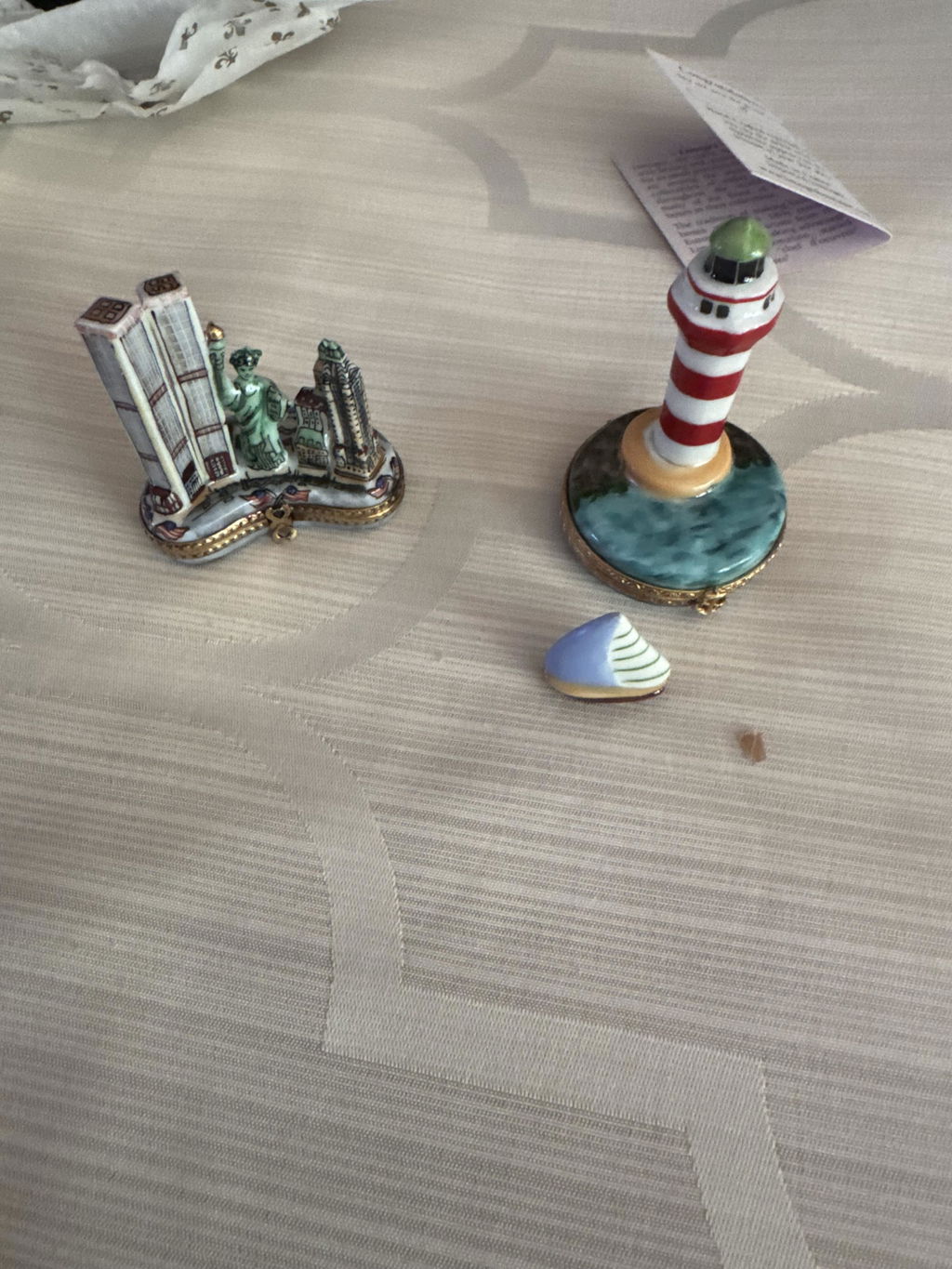
What is so special about Limoges porcelain?
Limoges porcelain stands out as one of the world’s most revered fine ceramics, prized for its quality, history, and artistry. Here’s what makes it special:1. Unique Raw Materials (Kaolin Discovery)
- The secret begins in 1768 near Limoges, France, when a rare deposit of pure white kaolin (the essential clay for hard-paste porcelain) was discovered in Saint-Yrieix-la-Perche.
- Before this, Europe struggled to match Chinese porcelain. Kaolin + petuntse (feldspar) fired at high temperatures created true hard-paste porcelain—strong, translucent, and white—unlike softer European alternatives.
-
Limoges produces hard-paste porcelain (fired at ~1,400°C / 2,550°F), which is:
- Denser and more durable than bone china or soft-paste.
- Naturally white and translucent, ideal for intricate painting and gilding.
- Resistant to chipping and crazing over time.
- Limoges became a porcelain hub in the 18th–19th centuries, with factories supported by French royalty (e.g., Sèvres influence under Louis XV).
-
Over 200 years, artisans perfected techniques like:
- Hand-painting with enamel colors that fuse in a third firing.
- Grand feu (high-fire) gilding that bonds gold permanently.
- Pâte-sur-pâte (layered slip decoration for cameo-like reliefs).
- Only porcelain made in the Limoges region (Haute-Vienne) can legally bear the “Limoges, France” mark (protected designation since 2017).
-
Famous makers include:
- Haviland (American-founded, French-made; known for elegant dinnerware).
- Bernardaud (luxury, modern designs).
- Raynaud (crisp whiteware with crystalline glazes).
- These brands supply presidents, royals, and Michelin-starred restaurants.
- Limoges blanks (plain white pieces) are exported worldwide for custom decoration—from classic floral motifs to contemporary pop art.
- Collectors seek antique Limoges (especially 1870–1930 “Golden Age”) for hand-painted cabinet plates, often signed by artists.
- Rare pieces (e.g., Art Nouveau by Camille Tharaud or Tiffany & Co. Limoges) fetch thousands at auction.
- Condition, artist signature, and factory marks dramatically affect value.
Limoges porcelain = French kaolin + 250 years of mastery + artistic freedom.
It’s not just tableware—it’s functional art with a pedigree unmatched in the West.
Fun fact: The Limoges train station is built with porcelain tiles—proof of its durability!
It’s not just tableware—it’s functional art with a pedigree unmatched in the West.