Collections
Browse by Collections
Browse by Collections


A tiny porcelain box can hold far more than a ring, a note, or a cherished memento. It can hold the memory of a wedding day, the delight of a new grandchild, a beloved pet, or a long-awaited trip. That is the enduring appeal of authentic Limoges boxes France collectors and gift-givers seek: each one is a small work of French decorative art, created to be admired, handled, and remembered.
For more than a century, Limoges porcelain has been associated with exceptional material, skilled artistry, and refinement. Yet the name alone does not tell the whole story. For a meaningful gift or a carefully chosen addition to a collection, it helps to understand what distinguishes a true French-made Limoges box from an imitation inspired by its style.
An authentic Limoges box begins in Limoges, France, a city whose porcelain heritage grew from the discovery of fine kaolin clay in the region during the 18th century. Kaolin gives hard-paste porcelain its prized qualities: a luminous white body, a delicacy that can still be remarkably durable, and a beautifully smooth surface for hand-painted decoration.
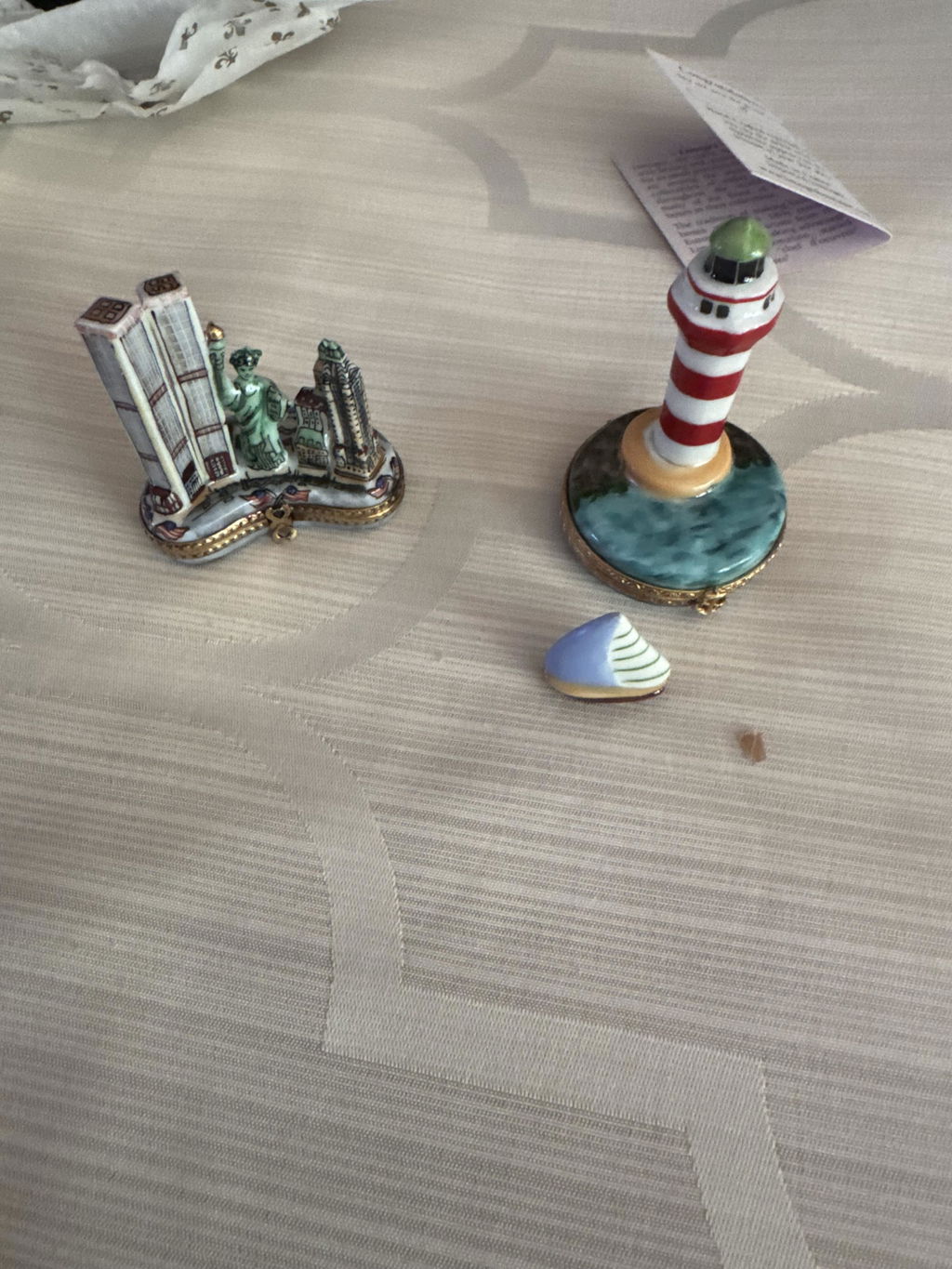
The classic Limoges box is a miniature hinged porcelain container. Its porcelain body is shaped, fired, glazed, and decorated by skilled artisans, often with remarkably detailed scenes or figurative forms. A basket of flowers may have individually painted petals. A little French handbag, sailing boat, or puppy may be modeled in relief and finished with fine brushwork that brings out the character of the design.
The metal fitting is part of the artistry, not merely a practical closure. Traditionally crafted in brass or another metal and carefully fitted to the porcelain, it allows the box to open and close while completing its silhouette. A clasp may be shaped as a bee, flower, shell, heart, or another detail that enhances the story of the piece.
Because these treasures are made and painted by hand, small variations are natural. The placement of a flower, the depth of a color, or the expression on a figurine may differ slightly from one box to another. Those distinctions are signs of human workmanship and give a hand-painted porcelain treasure its individual presence.
The underside of a box is one of the first places a collector should look. Authentic pieces made in Limoges, France commonly carry marks that identify their French origin, a workshop, a decorator, or a specific line. Marks vary by maker and period, so there is no single stamp that every genuine box must share. A clear French-origin mark is meaningful, but it should be considered alongside the quality and construction of the entire piece.
Look closely at the porcelain itself. Fine Limoges porcelain usually has a smooth, refined finish and crisp shaping, even on a petite or highly detailed design. Hand-painted decoration should feel deliberate rather than flat or mechanically repeated. Fine lines, layered color, subtle shading, and carefully finished details are especially visible in florals, faces, landscapes, and animal designs.
The hinge and clasp deserve equal attention. On a well-made box, the mounting should sit neatly against the porcelain, and the lid should align properly when closed. A handcrafted fitting will not necessarily look machine-perfect, but it should feel secure and thoughtfully placed. Rough edges, poor alignment, generic-looking hardware, or a loose lid can be reasons to ask more questions.
Provenance also matters. Buying from a specialist who focuses on French-made Limoges porcelain offers reassurance that a general marketplace listing often cannot. A knowledgeable source can help explain marks, workshop traditions, condition, and whether a design is suitable for collecting, gifting, customization, or appraisal. At Limoges Boutique, that specialist perspective is central to helping customers select pieces with confidence.
Many decorative trinket boxes borrow the look of a Limoges box. They may be porcelain-like, hinged, colorful, and sold with a reference to Limoges. That does not automatically make them French-made Limoges porcelain.
The distinction matters because an authentic piece represents a particular artistic tradition and the labor of French artisans. It also affects collectibility, gift value, and the ability to document a piece for insurance or estate purposes. A less expensive imported box can be charming for casual display, but it is not the same object as a hand-painted box created in Limoges, France.
Price alone is not a reliable test. Intricate, limited, or discontinued designs may command higher prices, while a small classic motif may be more accessible. The better question is whether the price reflects the workmanship, origin, condition, rarity, and level of detail. A thoughtful buyer looks for value rooted in artistry rather than simply the lowest price or the most elaborate design.
The best Limoges box often begins with a story. For an anniversary, a heart, champagne bottle, wedding cake, or pair of doves can become a lasting reminder of the celebration. For a birthday, consider an interest that feels distinctly theirs: gardening, music, golf, cooking, travel, fashion, or a favorite animal.
A baby shoe, teddy bear, or stork motif makes a graceful keepsake for a new arrival. Holiday designs bring an especially warm tradition to Christmas, Easter, Valentine’s Day, or a family table setting. Religious motifs can mark a baptism, confirmation, or other spiritual milestone with quiet elegance.
Collectors may choose differently. Some enjoy building a collection around a single subject, such as cats, orchids, Paris landmarks, or dessert-themed boxes. Others are drawn to particular shapes, painters, workshop marks, seasonal designs, or retired pieces. There is no single correct approach. A cohesive collection can be deeply satisfying, but an eclectic cabinet filled with gifts and travel memories can be just as personal.
Consider scale as well. A petite box may be ideal for holding a small note, ring, or tiny keepsake, while a larger figurative piece can make a striking display object. If the recipient already collects, notice what they love. Do they favor detailed miniatures, romantic florals, whimsical animals, or traditional French imagery? Matching that preference shows care beyond the occasion itself.
Limoges boxes are made to last when treated with gentle attention. Display them away from direct sunlight, which may gradually affect painted color, and keep them on a stable surface where they are unlikely to be knocked over. When opening a box, support the porcelain body rather than pulling hard on the clasp.
For routine care, a soft, dry cloth is generally enough to remove dust. Avoid soaking the box, using abrasive cleaners, or placing it in a dishwasher. Moisture and harsh chemicals can affect metal fittings and decorative finishes. If a piece has an older hinge, a delicate clasp, or a condition concern, professional guidance is wiser than an improvised repair.
Keep original packaging, certificates, receipts, and any information about marks whenever possible. These details can be useful for collectors and can support future appraisal needs. For a gift, tuck a handwritten note alongside those materials. It adds a human connection to an object already made by human hands.
A French Limoges box does not need a grand occasion to become meaningful. Chosen with care, it can mark a life event today and quietly become part of someone’s story for decades to come.
{"one"=>"Seleccione 2 o 3 artículos para comparar", "other"=>"{{ count }} de 3 artículos seleccionados"}
Seleccione el primer artículo para comparar
Seleccione el segundo artículo para comparar
Seleccione el tercer elemento para comparar